From dive equipment
to cultural icon
In the early 1950s, professional divers needed timepieces that could survive pressure, salt water, and total darkness. What began as purpose-built tool watches — the Submariner, the Fifty Fathoms, the Seamaster — became, decades later, the most recognised silhouettes in modern watchmaking. Today's collectors prize them for the same reasons: integrity of design, robustness of build, and an unbroken lineage that connects the wrist to the sea.
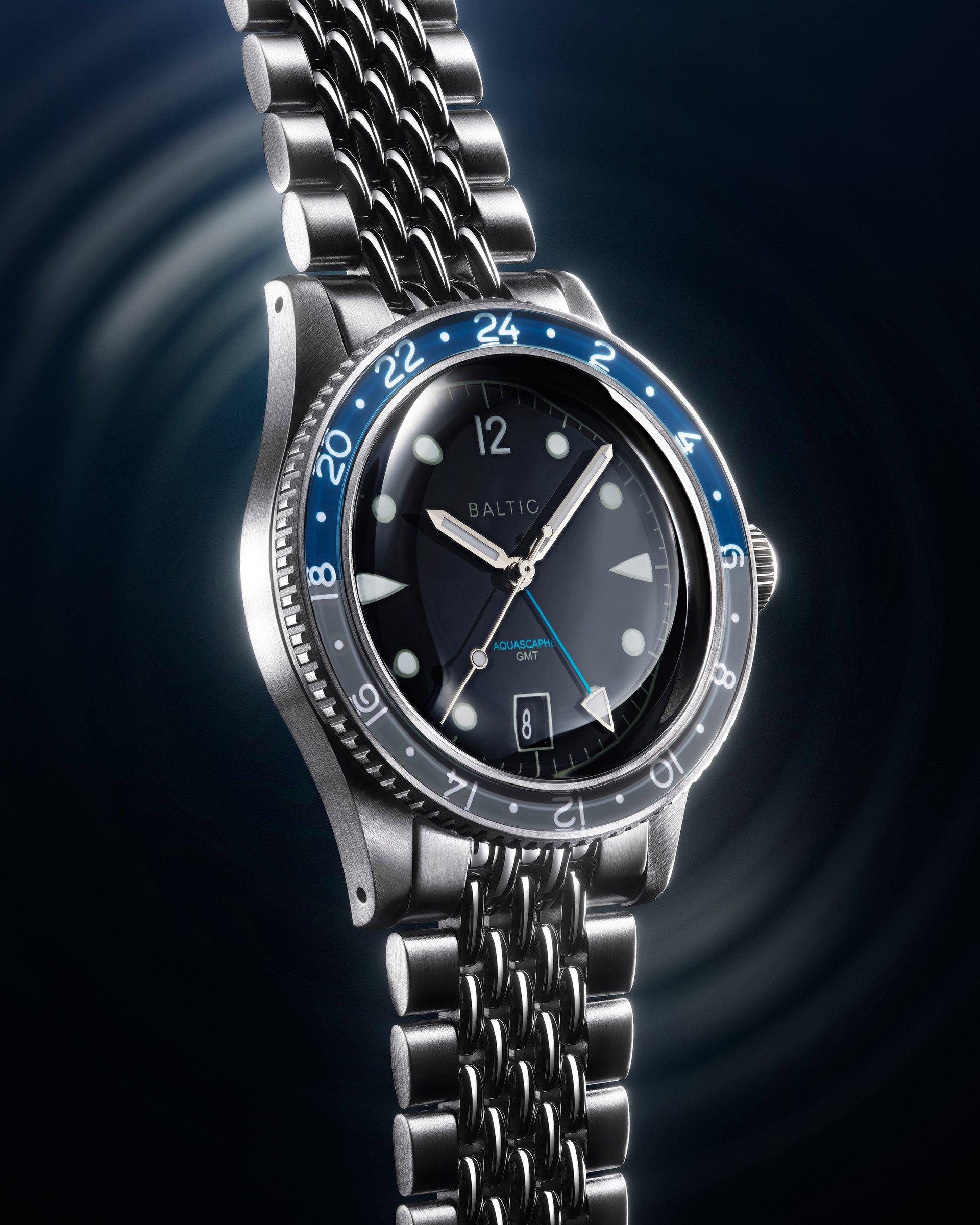
Baltic Aquascaphe GMT — Available on The Horological Foundry
Built to a specific purpose
Every detail of a dive watch is born of utility. Four features define the genre.
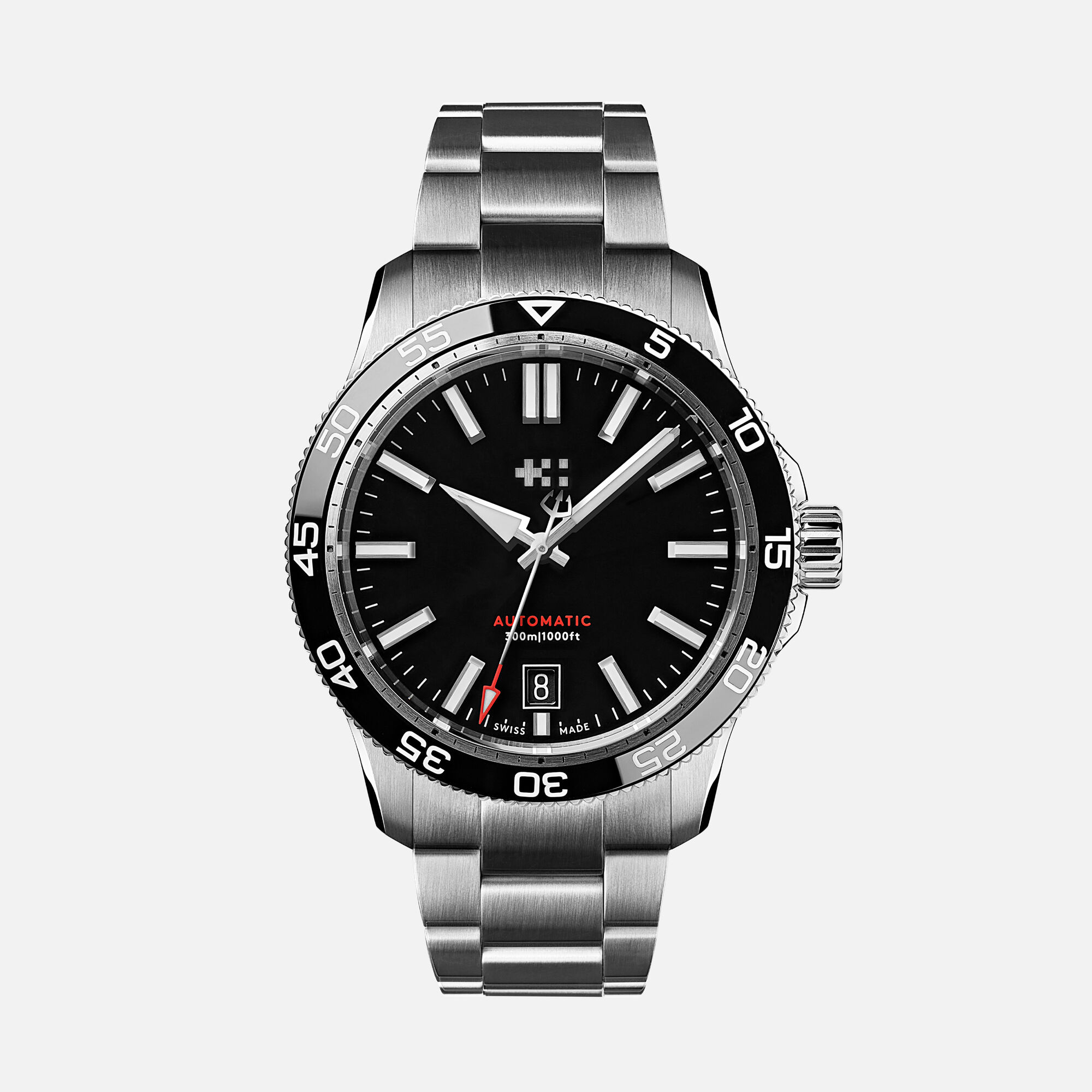
Christopher Ward C60 Trident Pro 300 — Available on The Horological Foundry
Built to withstand the pressure
A modern dive watch must survive 200 metres of saltwater pressure — the threshold defined by ISO 6425. Screwed casebacks, gaskets, and pressure-tested cases stand between you and the sea.
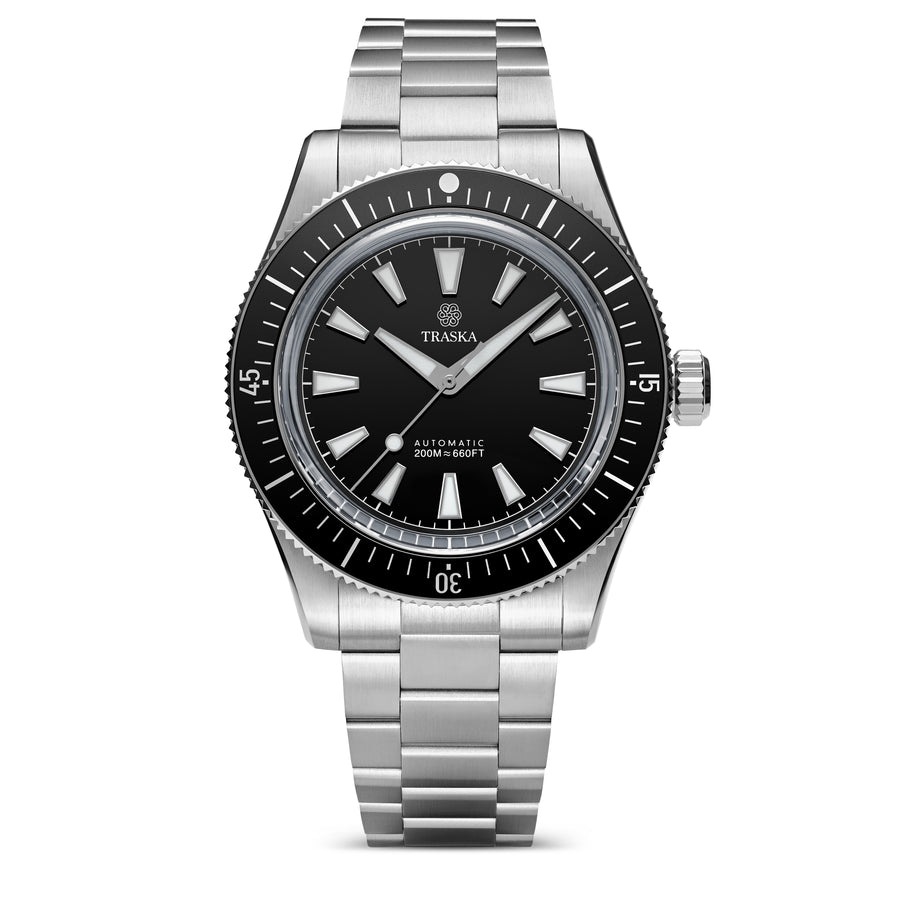
Traska Freediver
Sixty minutes of precision
Rotating only counter-clockwise, the bezel tracks elapsed bottom time. Should it drift accidentally, it only ever shortens the perceived dive — a fail-safe built for safety, not aesthetics.
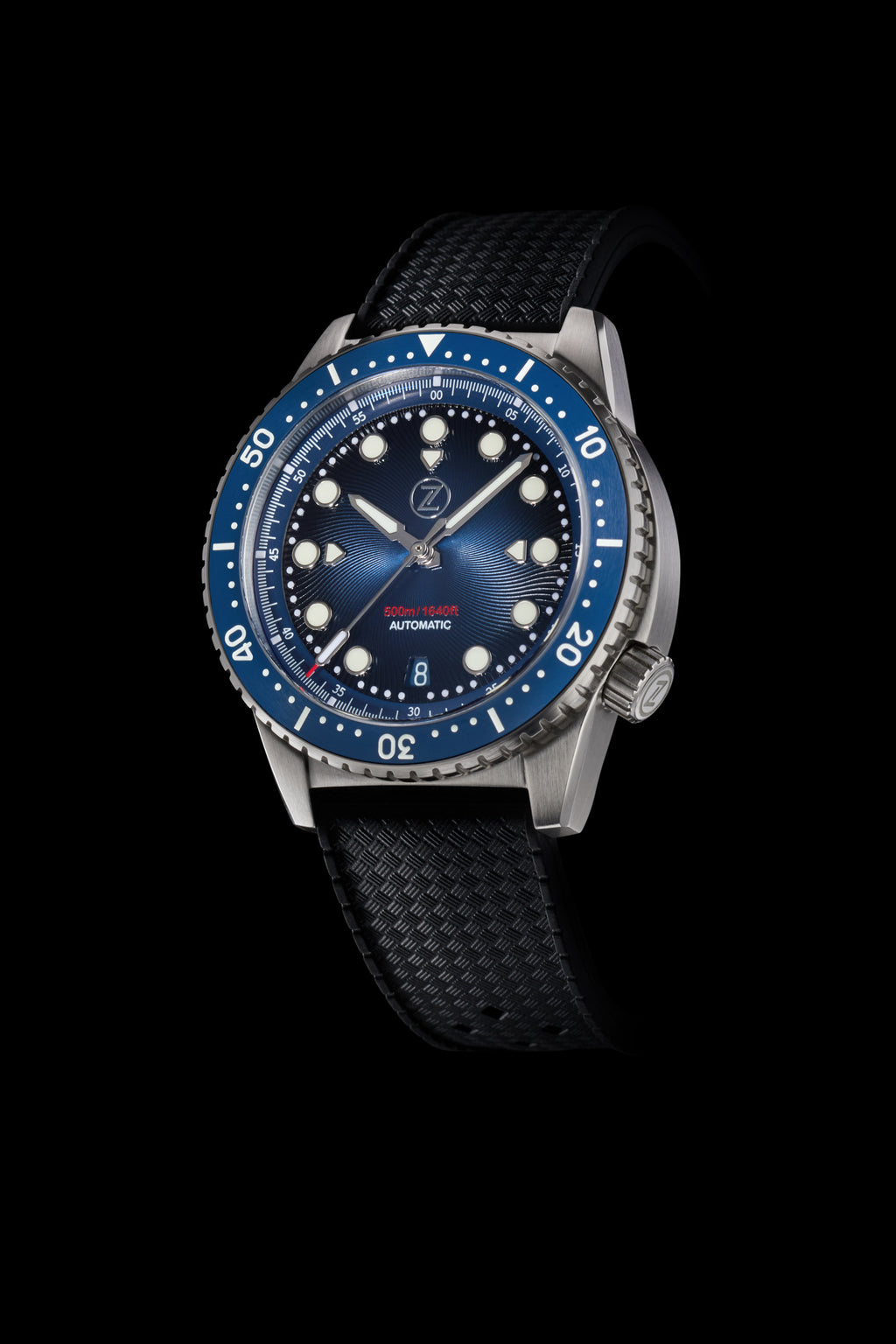
Zelos Mako V2
Read at thirty metres
Hour markers and hands coated with photoluminescent Super-LumiNova glow for hours after exposure to light. In total darkness, the dial remains legible — the difference between safe surfacing and disorientation.
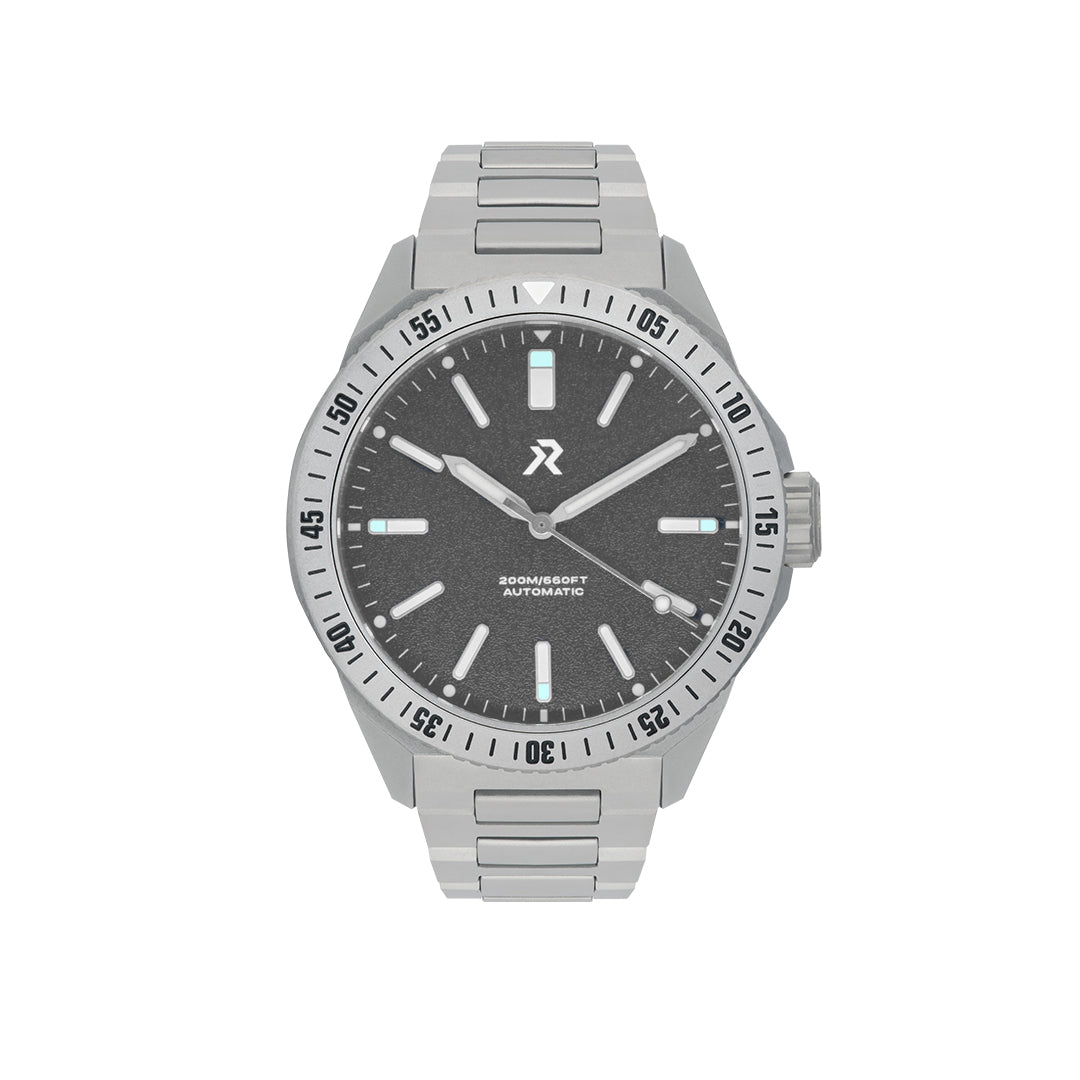
RZE Endeavour
Forged for the elements
316L stainless steel, titanium, or modern ceramic — the case material resists corrosion, magnetism, and shocks. A screw-down crown seals the movement against water ingress.
Six decades of silhouettes
From naval tool to modern icon — five moments that shaped the genre.
Developed in collaboration with French naval combat divers. The first watch to combine rotating bezel, screw-down crown, and 100-metre rating in a single timepiece.
Designed for professional divers and tested by oceanographer Jacques Piccard. Set the visual language for nearly every dive watch that followed.
Issued to British naval divers and military aviation. Established the 300-metre benchmark and introduced the broad-arrow indices still used today.
Designed with input from Jacques Cousteau and his diving team. Introduced the orange dial — a visibility innovation that became its signature.
Reframed the dive watch beyond the tool category. Octagonal cases, integrated bracelets, and refined finishing established the genre's place in fine watchmaking.
Today's dive watches, curated
From the founding makers of The Horological Foundry, available now.
Explore the collection
Discover more independent watchmakers — dive watches and beyond.
Browse all watches →